
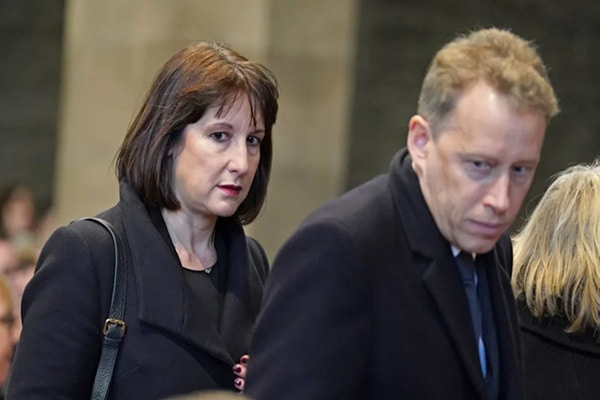
Nicholas Joicey, often called Nick Joicey, is not someone who seeks attention. Yet his influence inside the British Civil Service has quietly shaped major decisions across finance, welfare, environmental policy, and government operations. His career is a rare blend of academic depth, strategic thinking, and steady leadership.
For anyone curious about how senior UK policymakers rise through the ranks or how long-term governance actually works behind the scenes, Nicholas Joicey’s story offers valuable insight. This article walks through his life, education, career milestones, leadership style, and lasting impact in a way that feels approachable and easy to follow.
Who Is Nicholas Joicey?
Nicholas Beverley Joicey is a senior British civil servant known for holding some of the most demanding roles inside UK government departments. Born on May 11, 1970, in Guisborough, North Yorkshire, he built a career that spans finance, environmental policy, social welfare, and cross-government coordination.
Over more than two decades, he has worked at:
-
HM Treasury
-
Department for Environment, Food and Rural Affairs
-
Department for Work and Pensions
-
Cabinet Office
His reputation rests on calm leadership, analytical clarity, and the ability to manage complex systems without losing sight of public impact.
Early Life and Academic Foundations
Nicholas Joicey’s early years were shaped by a strong interest in history, ideas, and how societies function. That curiosity guided his academic path.
He completed:
-
An undergraduate degree in History at the University of Bristol
-
A Ph.D. at Peterhouse, University of Cambridge
His doctoral research explored the cultural and political influence of Penguin Books during the mid-20th century. This work examined how publishing, ideas, and communication shape public thought and national identity.
That academic background later became one of his greatest strengths. It gave him a broad lens for understanding policy beyond numbers and regulations.
From Journalism to Public Service
Before entering government, Nicholas Joicey spent time in journalism. Between 1995 and 1996, he worked for The Observer, one of Britain’s most respected newspapers.
This experience sharpened skills that later proved essential:
-
Clear communication
-
Analytical writing
-
Understanding public concerns
-
Translating complex topics into accessible language
Rather than staying in media, he chose a path focused on direct public service. The transition into the civil service marked the beginning of a long and influential career.
Building Expertise at HM Treasury
Nicholas Joicey’s rise accelerated during his years at HM Treasury. He held several senior roles, including Director for International Finance.
In that position, he represented the UK at major global institutions such as:
-
The International Monetary Fund
-
The World Bank
He also served as Private Secretary and Speechwriter to the Chancellor of the Exchequer, working closely with Gordon Brown. This role placed him near the center of national economic decision-making.
Through this work, Joicey developed deep expertise in:
-
Public finance
-
Economic policy
-
International development funding
-
Global financial cooperation
Colleagues often describe this period as foundational to his strategic credibility.
Expanding His Scope at DEFRA
In 2014, Nicholas Joicey joined the Department for Environment, Food and Rural Affairs as Director General for Strategy, International, and Biosecurity.
This role required balancing environmental priorities with economic realities. His responsibilities included:
-
Managing international environmental relationships
-
Overseeing sustainability frameworks
-
Responding to biosecurity risks
-
Aligning UK environmental policy with global standards
His leadership emphasized practical solutions rather than idealistic promises. That approach earned respect across departments.
Managing One of Government’s Largest Budgets at DWP
In 2018, Joicey took on another demanding role as Director General for Finance at the Department for Work and Pensions.
DWP manages one of the largest budgets in the UK public sector. Oversight of welfare spending required:
-
Financial precision
-
Strong governance controls
-
Awareness of social impact
-
Accountability at every level
His performance demonstrated an ability to manage scale without losing empathy for the people affected by policy decisions.
Coordinating Government Strategy at the Cabinet Office
By September 2022, Nicholas Joicey moved to the Cabinet Office as Director General of the Economic and Domestic Secretariat.
This position placed him at the heart of cross-department coordination. The role involved:
-
Aligning economic policy across ministries
-
Supporting domestic strategy development
-
Improving internal government collaboration
His work during this period contributed to smoother coordination during a time of economic uncertainty and policy complexity.
Return to DEFRA as Second Permanent Secretary
In July 2023, Nicholas Joicey returned to DEFRA as Group Chief Operating Officer and Second Permanent Secretary.
This appointment placed him among the most senior civil servants in the department. His responsibilities included:
-
Operational efficiency
-
Strategic delivery
-
Ensuring policy execution matched government priorities
His leadership has been particularly important as environmental sustainability and agricultural reform continue to shape national policy.
Academic Leadership at Oxford’s Blavatnik School
In January 2025, Joicey began a one-year secondment as Interim Chief Operating Officer at the Blavatnik School of Government, University of Oxford.
This role reflects his long-standing interest in education and governance. At the Blavatnik School, he helps bridge theory and real-world policy practice by:
-
Supporting institutional leadership
-
Advising future public leaders
-
Sharing lived experience from government service
The move highlights his commitment to developing the next generation of policymakers.
Honors, Recognition, and Wider Contributions
Nicholas Joicey’s service has earned formal recognition. In 2019, he was appointed Companion of the Order of the Bath for contributions to public service and environmental policy.
Beyond government, he holds several influential roles:
-
Trustee of the Cambridge Film Trust
-
Independent Trustee and Chair of the Finance and Investment Committee at the University of Bristol
These positions reflect his ongoing engagement with culture, education, and public institutions.
Personal Life and Broader Influence
Nicholas Joicey is married to Rachel Reeves, a senior UK politician. Together, they have two children.
Although he keeps a low public profile, his household reflects a shared commitment to public service. Their combined influence spans policy, governance, and political leadership, making them a notable presence in national life.
Also Read : Marilyn Quek: The Inspiring Story of a Visionary Woman in Business and Family
Leadership Style and Working Philosophy
Joicey’s leadership style is defined by clarity, consistency, and trust. He is known for:
-
Calm decision-making under pressure
-
Long-term thinking rather than reactive solutions
-
Respect for evidence and institutional integrity
Colleagues often describe him as someone who listens carefully before acting, a trait that has served him well across departments.
Why Nicholas Joicey’s Career Matters
His journey offers valuable lessons for anyone interested in public administration:
-
Academic depth can strengthen practical leadership
-
Clear communication is essential in policy work
-
Ethical governance builds long-term trust
-
Adaptability matters more than rigid expertise
Nicholas Joicey’s career shows that influence does not require visibility. Impact often comes from steady, informed decision-making carried out behind the scenes.
Final Thoughts on Nicholas Joicey’s Legacy
Nicholas Joicey stands as one of the UK’s most respected civil servants, not because of public recognition, but because of consistent service across critical areas of government.
From international finance to environmental strategy, from welfare oversight to academic leadership, his career reflects intellectual rigor paired with practical execution.
His story reminds us that good governance depends on people willing to do complex work thoughtfully, patiently, and with integrity.